
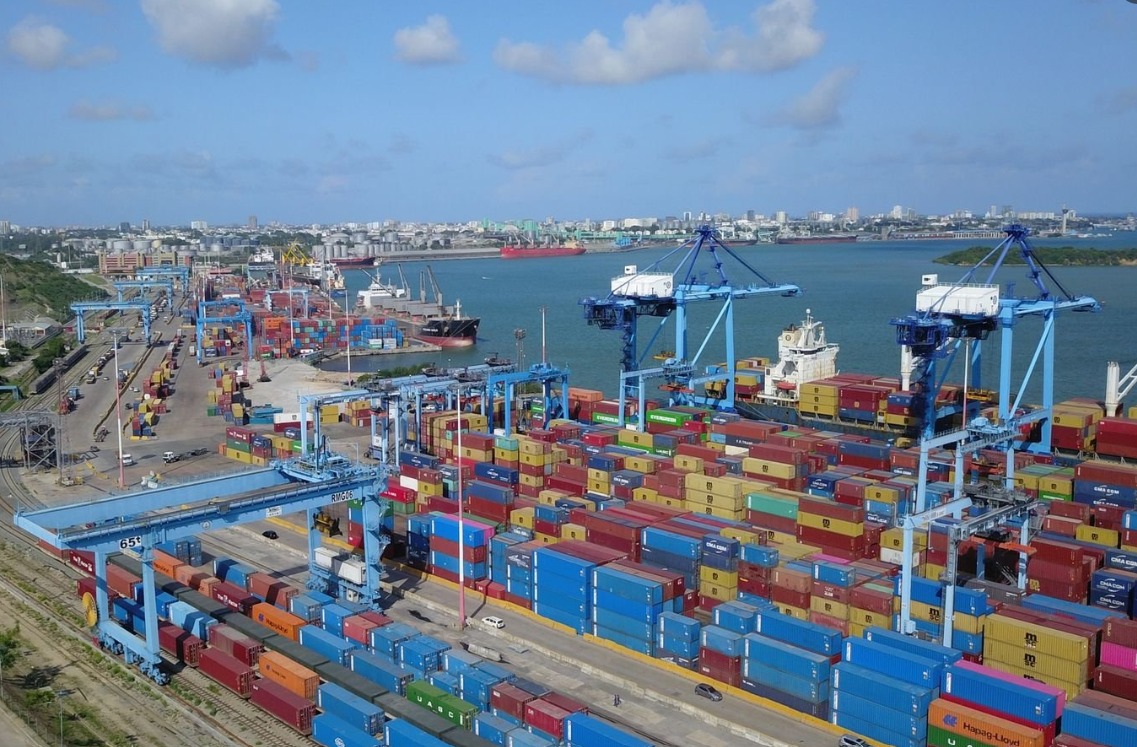
The Ports and Blue Economy pillar under the Bottom-Up Economic Transformation Agenda BETA is structured to strengthen Kenya’s maritime infrastructure, expand trade capacity, and develop ocean-based economic activities into a coordinated production system. Implementation links port development, shipping logistics, fisheries, aquaculture, and marine services into an integrated framework that supports national output and regional trade.
Kenya’s maritime positioning is anchored on its coastline along the Indian Ocean and its role as a logistics hub for Eastern and Central Africa. Port infrastructure is therefore being developed not only as entry and exit points for cargo, but as core economic assets that connect inland production zones to international markets while supporting the growth of the Blue Economy.
Lamu Port and Regional Trade Integration
- Operational Status, Infrastructure Delivery, and System Activation
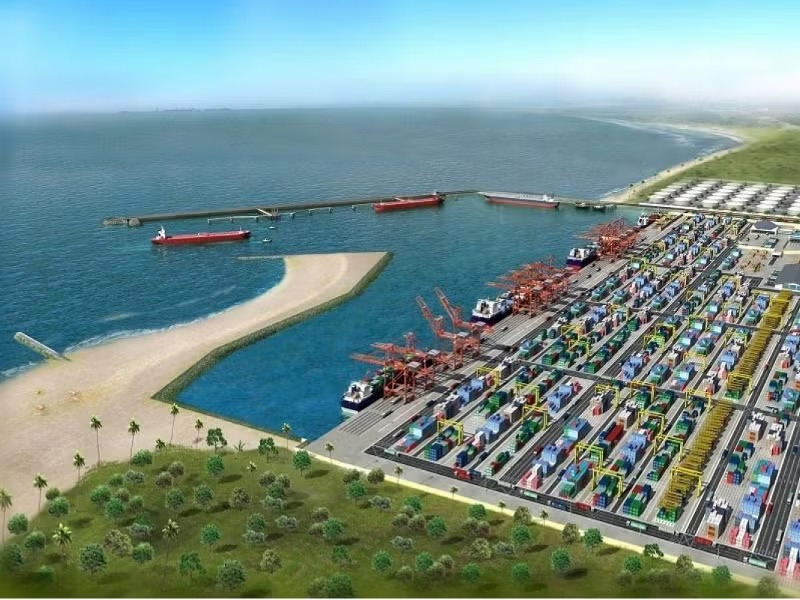
As of February 15, 2026, the Port of Lamu under the LAPSSET Corridor is fully operational, marking the transition from infrastructure development into active maritime service. The port has been constructed as a deep-sea facility designed to handle large cargo vessels, with modern berths, dredged channels, and cargo handling systems that meet international maritime standards.
Operational status indicates that the port is now capable of receiving vessels, handling cargo, and supporting logistics operations within the LAPSSET framework. - Deep-Sea Capacity, Vessel Handling, and Maritime Capability
Lamu Port is designed as a deep-water port with the capacity to accommodate larger vessels that require greater draft compared to older port facilities. This capability expands Kenya’s maritime handling capacity, enabling the country to participate more effectively in global shipping networks that rely on high-volume cargo movement.
The presence of deep-sea infrastructure strengthens Kenya’s competitiveness in maritime trade by supporting efficient loading and offloading of bulk and containerized cargo. - Strategic Location, Corridor Function, and Regional Access
The port is strategically positioned to serve as a gateway for Ethiopia and South Sudan, providing these land-linked markets with access to the Indian Ocean through the LAPSSET Corridor. This corridor integrates port infrastructure with road networks, facilitating movement of goods from the coastline into inland markets.
The positioning of Lamu expands Kenya’s role within regional trade by offering an additional maritime route that complements existing logistics systems. - Cargo Distribution, System Efficiency, and Port Network Balance
Activation of Lamu Port is contributing to distribution of cargo flows within Kenya’s port system. Maritime traffic is now able to be handled across multiple entry points, improving operational flexibility and reducing pressure on existing facilities.
This distribution enhances system efficiency by allowing cargo to be routed through different ports depending on destination, type of goods, and logistical considerations. - Inland Connectivity, Transport Linkages, and Trade Flow Integration
The effectiveness of Lamu Port is supported by its integration with inland transport infrastructure under the LAPSSET Corridor. Road networks linking Lamu to northern Kenya and neighboring countries enable movement of goods from the port into production and consumption zones.
This connectivity ensures that port operations translate into actual trade flows, supporting movement of imports into domestic markets and exports toward international destinations. - Economic Role, Trade Facilitation, and Market Access
The operationalization of Lamu Port is expanding Kenya’s capacity to facilitate trade by increasing entry points for goods and strengthening access to regional markets. The port supports importation of essential goods, export of agricultural and industrial products, and movement of transit cargo serving neighboring countries.
This function positions Lamu as a critical component within Kenya’s broader trade infrastructure, supporting economic activity linked to logistics, transport, and commerce.
Blue Economy Contribution, Fisheries Systems, and Cold Chain Infrastructure
The Kenya Kwanza administration has made deliberate, location-specific investments across Kenya’s major water bodies to restructure the Blue Economy into a functioning production and trade system. Implementation spans the Coast, Lake Victoria Basin, Lake Turkana, and aquaculture zones in inland counties, with each region receiving infrastructure tailored to its operating environment.
These interventions are designed around four critical control points in the fisheries value chain. Landing infrastructure governs how fish is received from water. Handling facilities determine grading and hygiene standards. Cold chain systems preserve quality and extend shelf life. Markets and distribution systems aggregate supply and connect producers to demand centers. Aquaculture systems run in parallel, providing controlled production that feeds into the same logistics network.
The government has therefore deployed jetties and landing edges, fish bandas, ice plants, cold rooms, fish markets, hatcheries, ponds, and cage systems across these regions. Each asset performs a defined function within the chain, ensuring that fish moves in a structured flow from production to consumption.
This section details how these investments are implemented region by region, showing the specific facilities in place, how they operate, and how they connect into a unified Blue Economy system that currently contributes approximately 2.5% to GDP.
Lake Victoria Basin: Fisheries Infrastructure, Cold Storage, Markets, and Fish Farming Systems
The Kenya Kwanza administration has made deliberate, budget-backed investments in the Lake Victoria Basin to strengthen how fish is landed, handled, preserved, aggregated, and traded. Delivery is anchored on specific facilities and programs across Kisumu, Homa Bay, Siaya, Migori, and Busia, with each intervention addressing a defined constraint within the fisheries value chain.
Kabonyo Kanyagwal Fisheries and Aquaculture Centre of Excellence, Kisumu County
The government has committed approximately KES 2.5 billion to establish the Kabonyo Kanyagwal Fisheries and Aquaculture Centre of Excellence as a regional hub for aquaculture development.
- Hatchery infrastructure and fingerling production
The project includes a hatchery complex designed to produce large volumes of fingerlings for distribution to farmers across the basin. This addresses a long-standing supply gap and improves survival rates and yields in both pond and cage systems. - Fish feed processing capability
The facility incorporates feed production capacity to support aquaculture farmers. Feed availability directly influences growth performance, and this component reduces dependence on external supply while improving farm-level productivity. - Training institute and demonstration units
The centre includes structured training facilities and demonstration ponds where farmers, cooperatives, and youth groups receive practical instruction on aquaculture management, including stocking, feeding, harvesting, and disease control. - Production systems and applied aquaculture
On-site ponds and aquaculture units support direct fish production and demonstration of best practices, ensuring the facility operates as both a training and production centre.
Lake Victoria Landing Sites Improvement Program
The government has allocated approximately KES 1.5 billion to upgrade landing infrastructure across key beaches in the Lake Victoria Basin.
Dunga Landing Site, Kisumu County
- Docking edges and structured landing surfaces
Investment at Dunga includes reinforced docking edges that allow vessels to offload directly onto stable, raised surfaces. This reduces physical damage to fish and improves handling efficiency. - Fish banda and handling infrastructure
A fish banda equipped with sorting tables, washing points, and drainage systems supports immediate cleaning and grading of fish after landing. - Ice supply and storage systems
Ice and storage facilities at the site enable preservation before fish is transported to Kisumu markets and other destinations.
Mbita and Sori Landing Sites, Homa Bay County
- Landing and aggregation infrastructure
Mbita and Sori have received upgrades to landing areas, including structured handling zones that support aggregation of fish from both mainland and island communities. - Ice production and cold storage
Facilities at these sites include ice systems and cold storage units that preserve fish during handling and before transport. - Linkage to processing channels
Fish from these sites supplies local markets and processing facilities, including those handling Nile perch for domestic and export markets.
Uhanya and Usenge Landing Sites, Siaya County
- Landing and handling improvements
Upgraded landing areas provide organized spaces for offloading and handling fish. - Fish bandas and grading systems
Bandas support sorting and grading, allowing fish to enter trade channels in defined quality categories. - Cold chain support
Ice facilities ensure preservation during movement to markets within Siaya and neighboring counties.
Busia County Landing Sites
- Structured landing and handling facilities
Investment supports organized offloading, sorting, and aggregation at landing sites across Busia. - Cross-border trade facilitation
Improved handling and preservation systems support fish movement into cross-border markets, particularly into Uganda. - Market support for traders
Facilities provide improved sanitation, storage, and organized trading spaces that support small-scale traders.
Fish Markets and Trade Infrastructure
Kisumu Fish Markets
- Organized market facilities
Government-supported markets in Kisumu include designated trading areas, water supply, and structured layouts that support efficient trade. - Weighing and transaction systems
Weighing equipment ensures fish is sold based on weight and quality, improving transparency in transactions. - Aggregation and redistribution
Fish from multiple landing sites is consolidated and distributed to urban markets, including Nairobi and regional centers.
Homa Bay and Siaya Markets
- Market infrastructure and sanitation
Markets include drainage, handling areas, and sanitation systems that support clean trade environments. - Direct linkage to landing sites
Fish flows from landing beaches into these markets, ensuring continuity within the value chain. - Local economic support
Markets support livelihoods for traders, transporters, and small-scale processors.
Cage Farming and Aquaculture Systems
The government has initiated aquaculture expansion across the basin to support controlled production.
- Cage farming in Lake Victoria
Cage systems are being implemented across Kisumu, Homa Bay, Siaya, Migori, and Busia, allowing fish to be raised within enclosed structures in the lake. - Pond-based aquaculture
Support for pond construction enables farmers to manage production cycles and ensure predictable output. - Fingerling and feed support
Hatchery systems and feed availability strengthen aquaculture productivity across the region. - Integration with markets
Aquaculture output feeds into the same handling, storage, and market systems, ensuring continuous supply.
Lake Turkana Region: Fisheries Infrastructure, Solar Cold Chain, and Market Access Systems
The Kenya Kwanza administration has implemented targeted Blue Economy interventions in Lake Turkana to address structural constraints linked to remoteness, high temperatures, and limited grid power. Delivery in this region is anchored on landing support facilities, solar-powered preservation systems, aggregation points, and transport linkages, ensuring that fish produced in Turkana can enter structured market channels.
Lake Turkana supports one of the country’s largest inland fisheries by surface area, with production concentrated around Kalokol, Lowarengak, and surrounding beach clusters. The challenge in this region has historically been preservation and market access, given long distances to major consumption centers and environmental conditions that accelerate spoilage. Government interventions are therefore designed to stabilize fish quality at source and extend its movement into formal markets.
Kalokol Fisheries Infrastructure, Turkana Central
Kalokol functions as the primary fisheries hub on the western shores of Lake Turkana and hosts a concentration of landing, handling, and preservation infrastructure.
- Fish bandas and structured handling facilities
Government has developed fish bandas at Kalokol that provide raised sorting surfaces, wash areas, and organized handling spaces. Fish is received, sorted by species and size, and cleaned immediately after landing.
This ensures that fish enters the value chain in a controlled and hygienic condition, improving quality for trade. - Solar powered cold storage systems
Kalokol is equipped with solar-powered cold rooms that maintain low temperatures without reliance on grid electricity. These systems are critical in Turkana’s high-heat environment, where fish deteriorates rapidly without preservation.
Cold storage enables fish to be held for extended periods, allowing aggregation before transport. - Ice production units
Ice plants supported by solar systems produce ice used for immediate cooling after handling. This stabilizes fish quality at the earliest stage and supports movement into storage and transport systems. - Aggregation and dispatch role
Kalokol serves as a central aggregation point where fish from surrounding landing areas is consolidated into larger volumes for onward transport to Lodwar and other markets.
Lowarengak and Northern Shore Landing Systems
Lowarengak and surrounding northern shore landing areas support dispersed fishing communities operating along Lake Turkana.
- Landing areas and handling surfaces
Government has supported establishment of structured landing areas with bandas and handling surfaces that improve offloading and sorting of fish. - Solar cold storage deployment
Solar-powered preservation systems are deployed in these areas to ensure that fish can be stored before movement to aggregation points. - Collection and consolidation systems
Fish from smaller landing points is collected and transported to aggregation centers such as Kalokol. This ensures that dispersed production is integrated into a structured supply chain.
Cold Chain and Preservation Systems Across Turkana
Preservation infrastructure is the most critical component of Blue Economy delivery in Turkana.
- Solar cold rooms across landing zones
Solar cold rooms are deployed to provide continuous preservation capacity in off-grid locations. These systems maintain fish quality from landing through aggregation. - Ice plants and on-site cooling
Ice production ensures that fish is cooled immediately after handling, preserving freshness and extending shelf life. - Storage and aggregation function
Cold storage allows fish to be accumulated into volumes that justify transport over long distances. This supports planned distribution rather than immediate sale at low prices.
Transport and Market Linkages
The Turkana fisheries system is connected to markets through structured transport and distribution systems.
- Movement to Lodwar and regional markets
Fish from Kalokol and surrounding areas is transported to Lodwar, which serves as a regional distribution center. - Extension into national markets
With preservation systems in place, fish can be transported beyond Turkana into other counties, expanding market reach and supporting higher demand absorption. - Integration with cold chain logistics
Transport systems work alongside cold storage to maintain product quality throughout movement, ensuring that fish reaches markets in saleable condition.
Aquaculture and Fisheries Support Systems in Turkana
Government interventions also support diversification of fish production within the region.
- Support to fish farming initiatives
Aquaculture initiatives are being introduced to complement capture fisheries, providing controlled production where feasible. - Training and community support
Fisheries programs include training for local communities on handling, preservation, and market participation, improving efficiency across the value chain. - Integration with existing infrastructure
Aquaculture output feeds into the same cold storage and transport systems, ensuring that all production channels are linked to markets.
Coastal Region: Marine Fisheries Infrastructure, Fish Markets, Cold Chain, and Mariculture Systems
The Kenya Kwanza administration has implemented targeted Blue Economy infrastructure along the Coast to strengthen marine fisheries, improve handling and preservation, and connect coastal production to domestic and export markets. Delivery spans Kwale, Mombasa, Kilifi, and Lamu, with projects positioned at landing beaches, trading centers, and mariculture zones.
Marine fisheries operate under tidal conditions, dispersed landing points, and high-value species targeting. Government interventions therefore combine jetty access, landing slabs, fish bandas, ice plants, cold rooms, market facilities, and mariculture systems to create a continuous chain from catch to market.
Shimoni Fisheries Complex, Kwale County
Shimoni serves as a major marine fisheries node supporting artisanal and semi-industrial fishing activity.
- Jetty access and docking structure
Government has upgraded the Shimoni jetty, providing a stable docking point for fishing vessels. Boats berth directly against a raised platform, allowing fish to be offloaded without contact with sand or open shoreline. - Fish banda and handling facility
A structured fish banda provides raised sorting surfaces, washing points, and drainage systems. Fish is sorted by species and size and cleaned immediately after landing, improving quality entering the market. - Ice plant and cold storage systems
Shimoni is equipped with ice production and cold storage facilities. Fish is cooled immediately after handling and stored for aggregation before dispatch to markets and export channels. - Linkage to high-value marine trade
The facility supports handling of high-value species including tuna, lobster, and prawns, enabling participation in export-oriented supply chains.
Vanga Fisheries Landing Site, Kwale County
Vanga operates as a fisheries aggregation and cross-border trade node.
- Landing slabs and structured offloading
Reinforced landing slabs provide clean surfaces for offloading fish from boats, improving hygiene and reducing contamination. - Water systems and handling infrastructure
Water supply and washing points enable cleaning of fish immediately after landing, supporting quality control. - Ice systems and short-term storage
Ice facilities allow fish to be cooled and preserved before transport, extending shelf life and supporting movement beyond local markets. - Aggregation and trade role
Vanga consolidates fish from smaller fishing units, enabling bulk movement to markets and supporting cross-border trade.
Liwatoni Fisheries Complex and Mombasa Landing Systems
Mombasa hosts key infrastructure linking fisheries with urban consumption and port logistics.
- Liwatoni Fisheries Complex development
The Liwatoni Fisheries Complex has been developed as a modern landing and fish handling facility with structured offloading areas, bandas, and support infrastructure. - Cold storage and processing support
The complex includes cold storage systems that preserve fish before distribution to markets and processors. - Urban market linkage
Mombasa serves as a major consumption center, with fisheries infrastructure supporting continuous supply into hotels, restaurants, and retail markets. - Integration with maritime logistics
The coastal location enables linkage between fisheries and maritime transport systems, supporting movement of seafood into broader trade networks.
Kilifi and Malindi Fisheries Infrastructure
Kilifi and Malindi support dispersed artisanal fisheries requiring multiple infrastructure nodes.
- Landing sites and fish bandas
Government has upgraded landing sites across the coastline with bandas that support sorting, cleaning, and grading of fish at local level. - Ice plants and cold storage facilities
Cold chain systems are deployed across these sites, allowing fish to be preserved and aggregated before transport. - Market linkage and distribution
Fish from Kilifi and Malindi is transported to Mombasa and other markets, supported by preservation systems that maintain quality.
Lamu Fisheries and Integration with LAPSSET
Lamu combines fisheries development with strategic maritime positioning.
- Landing infrastructure and bandas
Government has supported landing sites with bandas and handling facilities across Lamu County. - Cold storage and preservation systems
Ice plants and cold storage units preserve marine catch, enabling aggregation and structured distribution. - Linkage to Lamu Port
With Lamu Port operational, fisheries infrastructure is positioned to integrate with port logistics systems, supporting future expansion of seafood trade.
Coastal Fish Markets and Trade Infrastructure
- Mombasa fish markets
Mombasa hosts structured fish markets with designated trading areas, water systems, and sanitation infrastructure that support high-volume trade. - Kwale and Kilifi markets
Local markets provide aggregation points where fish from landing sites is consolidated and traded before distribution. - Trade organization and pricing
Markets support bulk transactions and structured pricing, enabling traders to move larger volumes into urban and regional markets.
Mariculture Systems and Coastal Aquaculture
Government interventions also extend into marine-based aquaculture.
- Mariculture development initiatives
Projects support farming of marine species such as fish, crabs, and shellfish within controlled coastal environments. - Input support and training
Programs provide technical support to communities engaged in mariculture, improving productivity and survival rates. - Integration with cold chain and markets
Mariculture output feeds into the same preservation and market systems, supporting diversification of supply.
Conclusion: A Connected Blue Economy System Across Kenya’s Water Bodies
The Kenya Kwanza administration has established a coordinated Blue Economy system built on physical infrastructure deployed across the Coast, Lake Victoria Basin, and Lake Turkana. Each region is equipped with facilities suited to its operating environment, and all regions are linked through a common value chain that governs how fish is produced, preserved, aggregated, and traded.
Across the Coast, investments in Shimoni, Vanga, Liwatoni, Kilifi, and Lamu provide marine landing infrastructure, cold storage, and access to high-value seafood markets. Along Lake Victoria, projects such as the Kabonyo Kanyagwal Fisheries and Aquaculture Centre, the landing sites improvement program, and structured fish markets in Kisumu, Homa Bay, Siaya, Migori, and Busia support high-volume inland fisheries and aquaculture. In Lake Turkana, Kalokol and Lowarengak systems anchored on solar-powered cold storage and aggregation infrastructure ensure that fish from remote areas can enter formal market channels.
These investments operate as a single chain. Fish is received through structured landing infrastructure, handled within bandas that support grading and hygiene, preserved through ice systems and cold rooms, aggregated at market nodes, and distributed through coordinated transport networks. Aquaculture systems supply additional production through ponds and cage farming, ensuring continuity of supply across seasons and regions.
The result is a functional production-to-market system where infrastructure determines outcomes at each stage. More fish is preserved at landing, larger volumes are aggregated, and market reach extends beyond local consumption zones into urban and regional markets. Trade is organized through defined facilities rather than informal points, and value is retained across the chain through improved handling and preservation.
This integrated system underpins the Blue Economy contribution of approximately 2.5% to GDP, supporting livelihoods across fishing communities, aquaculture enterprises, traders, transporters, and processors. It establishes a structured pathway for expanding marine and inland fisheries into a stable, scalable economic sector anchored on infrastructure, production systems, and organized trade.
